
Scams Now Wear the Face of Routine Notifications
Modern scams now look like routine notifications. Learn how fake package alerts, fraud messages, toll notices, and law-enforcement calls trick people into losing money.

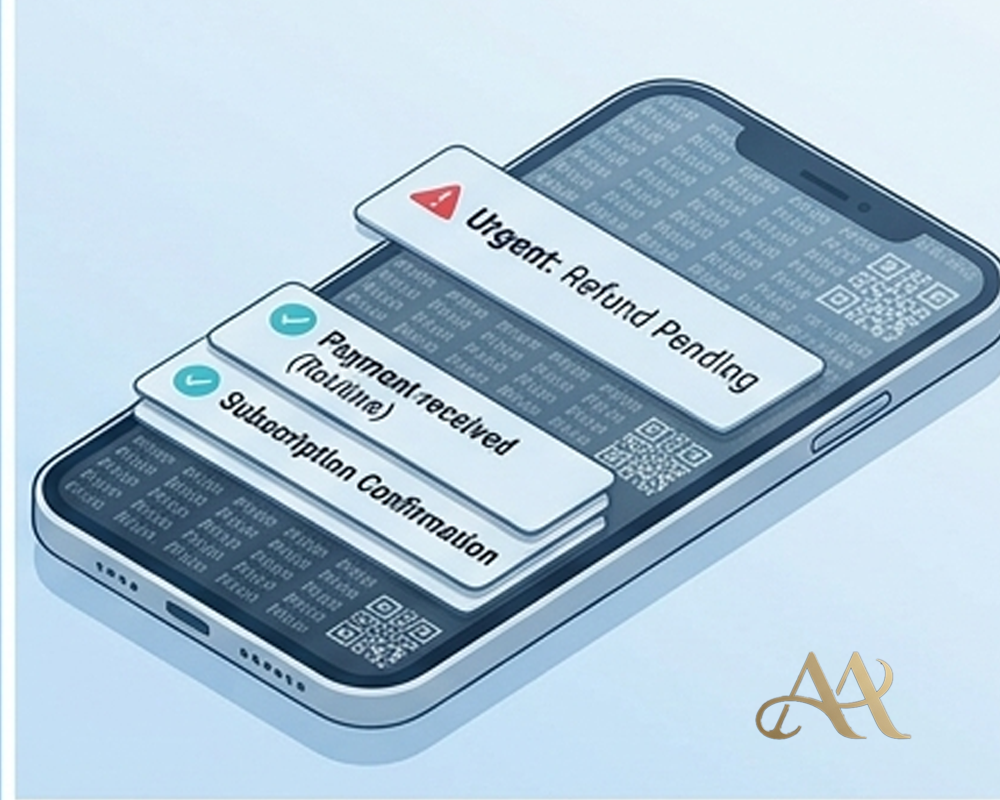
A scam no longer has to look strange to be dangerous. It can look like a delivery update, a bank fraud alert, a missed toll notice, a job message, or a call from local law enforcement. That is what makes modern scams effective. They arrive as ordinary admin, the kind of notification people are trained to respond to quickly.
The Federal Trade Commission reported that consumers lost $470 million to scams that started with text messages in 2024, more than five times the amount reported in 2020. Common themes included fake package delivery problems, bogus job offers, fake fraud alerts, unpaid toll notices, and wrong-number messages.
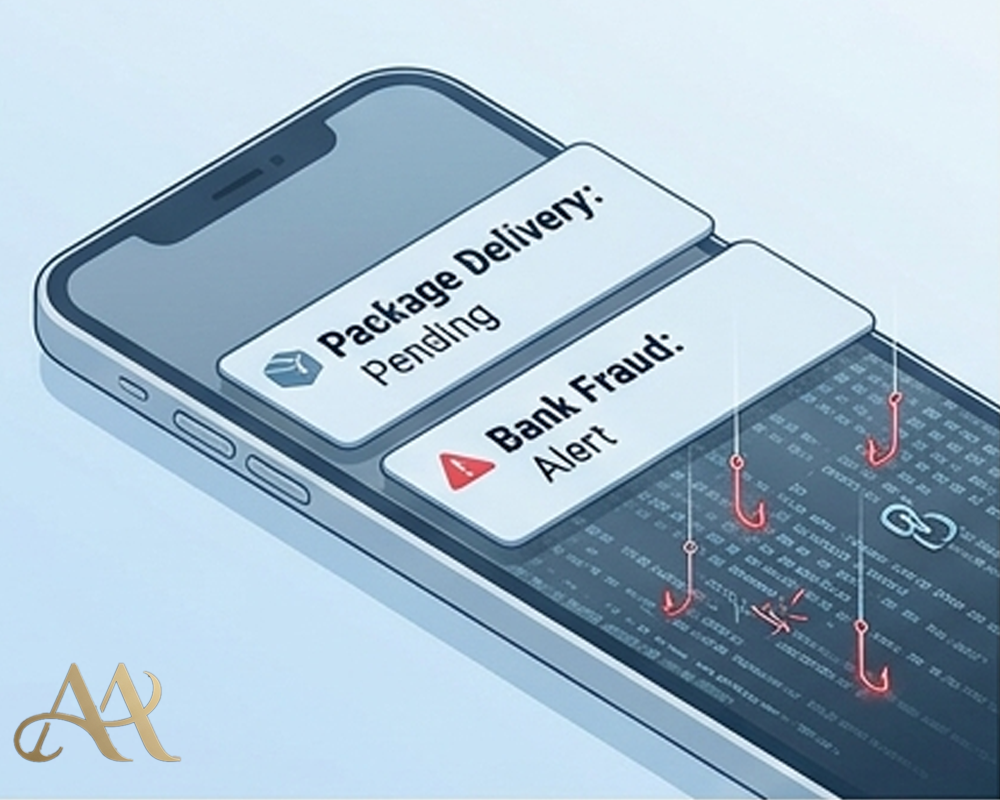 This article explains how routine-notification scams work, why they succeed, and what individuals and organizations can do to reduce the risk.
What It Is
Routine-notification scams are social engineering attacks disguised as normal messages from trusted systems or authorities. They may appear to come from a bank, courier, toll agency, employer, police department, or government office.
The goal is simple: make the victim react before they think.
This is broader than ordinary “smishing,” which refers to phishing through SMS. Today’s scams combine text messages, phone calls, spoofed caller ID, fake websites, payment apps, crypto ATMs, and sometimes follow-up calls from fake support agents.
The scam works because the message feels familiar. People expect package alerts. They expect banks to warn them about fraud. They expect toll agencies to send payment reminders. Attackers exploit that trust.
How It Works
Most routine-notification scams follow a clear attack flow.
- Initial Contact: The victim receives a text, call, or message claiming there is a problem. It may say a package cannot be delivered, a toll is unpaid, a bank transaction looks suspicious, or a job opportunity is available. The FTC identified these as some of the major text-scam themes reported in 2024.
- Impersonation: The attacker uses branding, urgency, and familiar language to make the message look legitimate. In phone-based scams, they may spoof caller ID so the call appears to come from a real police department or agency. The FTC has warned that scammers impersonating local law enforcement may claim a package linked to the victim contains money, drugs, or weapons, then threaten arrest unless payment is made.
- User Action: The victim clicks a link, replies to a message, calls a provided number, or follows payment instructions. In MITRE ATT&CK terms, this aligns with Phishing (T1566) and User Execution (T1204) because the attacker depends on the user taking an action.
- Credential or Payment Capture: Some scams collect usernames, passwords, card numbers, or Social Security numbers through fake websites. Others move directly to money theft by telling victims to pay through gift cards, payment apps, wire transfers, or cryptocurrency. The FTC warns that real law enforcement will not demand fines through cash, gift cards, cryptocurrency, payment apps, or wire transfers.
- Follow-Up Pressure: If the victim engages, the scammer often increases urgency. Fake fraud departments may claim all the victim’s money is at risk. Government impersonators may claim the victim must move money to “protect” it. The FTC warns that requests to move money, use a Bitcoin ATM, buy gift cards, or stay on the phone while withdrawing money are strong signs of a scam.
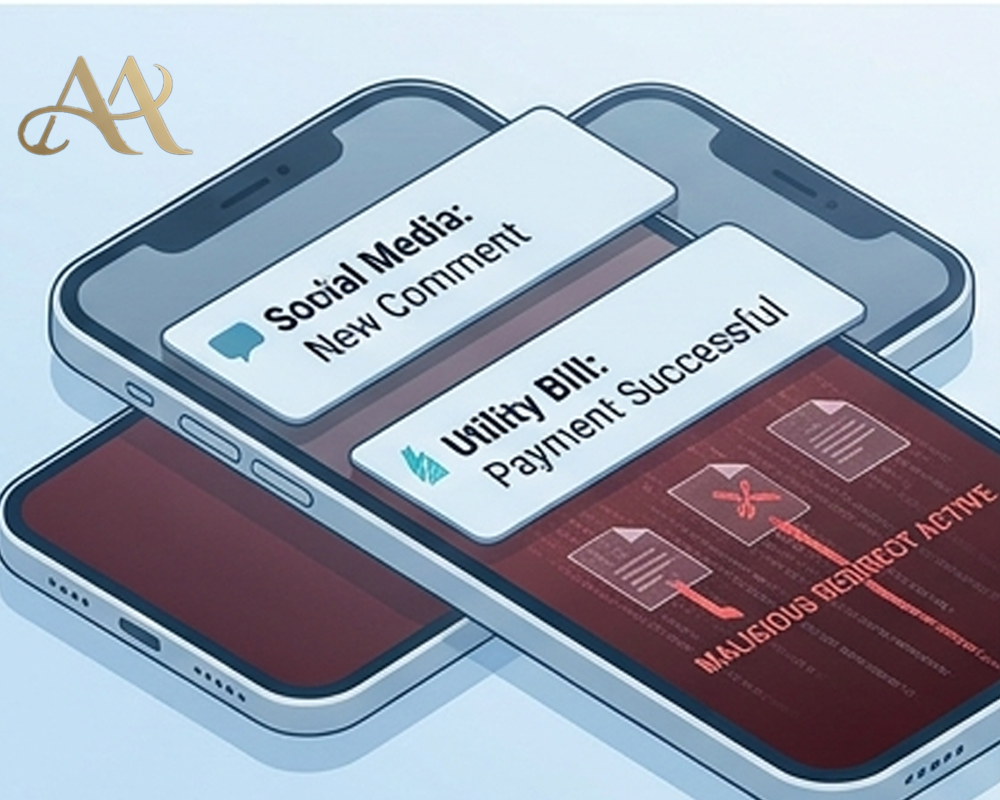
Real-World Impact
- For individuals, the impact can be immediate: stolen money, compromised accounts, identity theft, or emotional distress. Many victims do not fall for scams because they are careless. They fall because the message arrives in a context that feels normal.
- For businesses, these scams can lead to credential theft, fraudulent payments, payroll diversion, and account takeover. A fake fraud alert sent to an employee with finance access can become a business email compromise pathway. A fake job message can harvest personal data from applicants or deliver malware through fake onboarding documents.
- For systems and infrastructure, these attacks create monitoring challenges. The first step often happens on a personal phone, outside corporate EDR coverage. If stolen credentials are later used to access cloud services, the SOC may see a valid login rather than an obvious attack. At that point, SIEM visibility, conditional access, and behavioral monitoring become critical.
Common Mistakes or Misconceptions
- Assuming scams always look obvious: Many people still expect scam messages to be full of spelling errors, strange formatting, or unrealistic promises. Modern scams are often polished, well-timed, and designed to look like ordinary notifications from familiar services.
- Trusting caller ID: A phone number that appears local or official does not automatically mean the caller is legitimate. Attackers can spoof caller ID to make scam calls look like they are coming from a bank, delivery company, government office, or law-enforcement agency.
- Clicking links just to “check”: Some victims click suspicious links because they only want to confirm whether the message is real. That is risky. A single click can lead to a fake login page, fraudulent payment portal, malware download, or credential-harvesting site.
- Ignoring small payment requests: A fake $2 delivery fee or unpaid toll notice may look too small to matter. In reality, the goal is often not the small payment itself. It is to collect card details, personal information, or account credentials for larger fraud later.
Practical Defensive Measures
- For individuals, the strongest habit is verification. Do not click links in unexpected messages. Go directly to the company’s official website or app. If a bank, courier, toll agency, or police department supposedly contacted you, use a phone number you find independently. Never pay through gift cards, crypto ATMs, or payment apps because someone pressured you. Real agencies do not resolve arrests, fraud cases, or fines that way.
- For businesses, train employees with realistic examples: fake package notices, fake fraud alerts, fake HR messages, fake job applications, and fake vendor payment requests. Add SMS and phone scams to awareness training, not just email phishing.
Technically, enforce MFA, conditional access, and least privilege. Monitor for unusual logins, new devices, impossible travel, suspicious inbox rules, and abnormal payment changes. Feed identity and cloud logs into the SIEM so the SOC can detect when a routine-looking scam becomes account compromise.
Conclusion
Modern scams no longer need to announce themselves as suspicious. They succeed by looking ordinary. That is the real shift. The threat is not only in strange links or unknown senders. It is in messages that resemble the daily noise of modern life: deliveries, tolls, alerts, jobs, and official calls.
The safest response is not panic. It is pause, verify, and refuse pressure. When a message demands immediate action, that delay may be your strongest security control.
Related Stories
Old Routers Are the New Forgotten Security Gap
June 17, 2026
When “Opportunity” Becomes a Threat: The Cyber Risks of Job Hunting
May 2, 2026
Comments 0
No comments yet. Be the first to join the discussion.